What is an oil heater in an asphalt plant and how does it increase production efficiency?
heat transfer mechanism; critical points of the asphalt line; installation standards; Temperature error detection
Definition and internal structure of oil heater
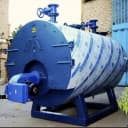
Oil heater is a system for producing heat by burning fuel (gas, diesel) in a furnace (Fire Tube) whose heat is absorbed by thermal oil. Unlike water boilers that produce steam, in oil heaters, the heat transfer fluid (oil) is heated directly.
The main components of the structure:
- Furnace (Combustion Chamber): A chamber where the burner is placed and the fuel burns.
- Coils (Coil/Tube Bundle): Tubes in which thermal oil flows and absorbs the heat of the flame. The design of the coils is often in the form of a multi-pass spiral to increase the thermal contact surface.
- Burner: It is responsible for providing primary heat and is controlled by safety sensors.
- Hot Oil Pump: The main driving force for hot oil circulation in System.
- Control and safety system: including operating temperature sensors, high limit temperature sensors and safety valves.
Thermal oil circulation cycle
Oil heater operation is based on a closed and continuous cycle:
- Heat generation: The burner burns the fuel and high heat is created in the furnace.
- Absorption in the boiler: Relatively cold thermal oil leaves the pump and enters the boiler coils. At this stage, the oil receives its heat from the flame and its temperature reaches the operating limit (for example, 300°C). Transfer to the consumer: The hot oil is pumped from the boiler outlet to the heat exchangers of the bitumen tanks or the asphalt mixer. Return and repeat the cycle: The oil loses its heat in the consumer. It is given and cooled (for example, to a temperature of 250°C) and then it returns to the pump inlet and back to the boiler through the return lines.
Advantages over steam systems
In the asphalt industry, oil heaters are superior to steam boilers:
- No need for high pressure: Oil heaters operate at high temperatures (above 180°C) without the need for high operating pressure, which increases operational safety.
- Precise temperature control: It is much easier to control the oil temperature to one degree Celsius than to control the pressure and steam temperature at high temperatures. This is vital to maintain bitumen quality.
- No corrosion and water scaling: The problem of internal corrosion or scaling (scale) that is common in water and steam boilers is not present in the thermal oil system (although there is a risk of oil coking, which can be controlled with proper maintenance).
Design tips and safety standards
The design of oil heaters must comply with international standards (such as TEMA for converters) as well as national standards for pressure vessels (in case of operating pressure due to oil vapors).
The most important safety considerations:
- Sealing system: Completely preventing oxygen from entering the hot oil system to prevent severe oxidation and fire.
- Over-Temperature Protection system: Installation of two temperature sensor stages; One for control and the other for emergency shutdown of the burner if the critical temperature is reached.
- Drip Tray Installation: Under the entire boiler equipment to collect possible hot oil leaks.
Periodic maintenance and service
Oil heater service includes periodic inspection of the burner, oil quality testing (as mentioned in article 2) and visual inspection of the coils to ensure no coke or cracks are formed. Annual service by Vapor Power experts ensures that efficiency is maintained and the useful life of the system is maximized.
FAQ oil heater asphalt plant
- How many degrees is the maximum safe working temperature for asphalt plant oil heater?
Usually, the maximum safe working temperature for high-quality oils is set at around 320-350 degrees Celsius. Exceeding this temperature will cause rapid oil decomposition. - Can the oil heater bring the bitumen to a temperature higher than 200°C?
Yes, oil heaters can easily provide the heat needed to bring the bitumen to 170-185°C (asphalt mixing temperature) and provide a higher storage temperature if needed. - In case of a sudden power outage, what happens to the oil in the coil?
If the circulation pump fails and the oil remains in the coils, its temperature will increase rapidly due to its low thermal stability and may cause coking or even severe decomposition. For this reason, emergency systems for pump rotation (even with batteries) are recommended.