Hot Oil Boiler Buying Guide for Bitumen Plant: Capacity, Temperature, Safety and ROI
capacity selection criterion; Selection of thermal oil for bitumen; fire and fire safety; fuel consumption and ROI; Pre-finalization checklist
The purchase of a hot oil boiler for bitumen plants is a key investment that directly affects the productivity and quality of the final product. This comprehensive guide covers all decision-making steps; From estimating the exact heat demand of the production line to reviewing manufacturing standards, safety tips and economic analysis of return on investment (ROI). As a specialized guide, Bochar Niro company paves the way for a safe and efficient purchase.
Introduction of hot oil boilers
Hot oil boilers are divided into several main categories based on how heat is transferred from the flame to the oil:
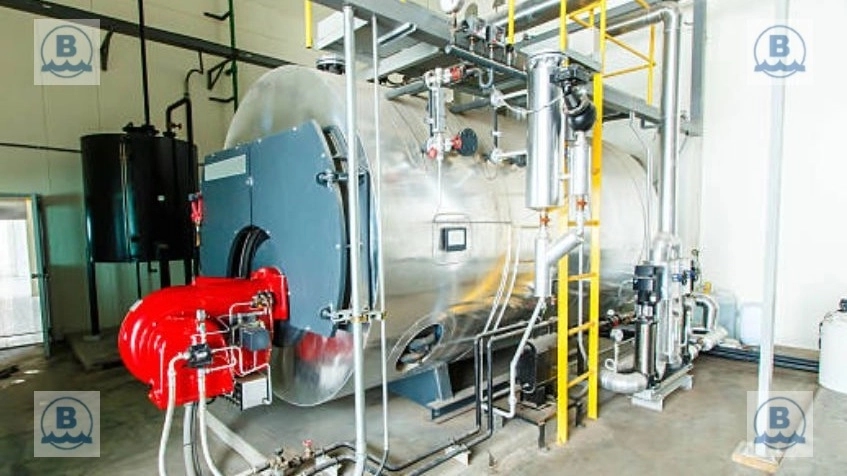
- Horizontal Three-Pass type: The most common type for medium and high capacities. The flame passes directly through the furnace and the smoke from combustion travels twice around the coils.
- Vertical Coil Type: This design is usually used for lower capacities or limited spaces. Heat transfer is done through direct contact with vertical coils.
- Coil type (Fire Tube/Coil): In this design, all heat transfer is done through dense spiral tubes, which has a very high efficiency, but its initial cost is higher.
For bitumen plants that require high temperature and continuous operation, a horizontal three-pass design with high quality coils often offers the best balance between price, efficiency and ease of service.
How to estimate the heat demand of the production line
As explained in article 3, the calculation of heat demand should not be based on guesswork. Engineers should:
- Determination of bitumen flow rate: The maximum amount of bitumen (in tons per hour) that should be used in the production line.
- Calculation of the time required for heating: Calculation of the energy required to bring the cold bitumen to the operating temperature at the start of the work shift.
- Determination of the total heat loss: Calculation of the loss Heat of hot bitumen storage tanks, transmission lines and side heat exchangers.
Expert advice: Always consider at least 20% of the required thermal capacity as a safety factor so that the performance of the line is not disturbed during peak consumption or reduction of oil quality.
Inspection of manufacturing standards and quality control
Buying a hot oil boiler means buying a pressure vessel. Manufacturing standards are very important:
- ASME Section I or Section IV standard: Although these codes are often not fully implemented in Iran, it is essential to follow their design and non-destructive testing (NDT) principles.
- Weld inspection: All pressure welding (body and coils) must be verified and tested by a competent inspector. Radiographic or liquid penetrated.
- Hydrostatic test: The main tank should be hydrostatically tested at a pressure of 1.5 times the operating pressure.
Bukhar Niro company guarantees that all production equipment is supplied in accordance with the highest domestic manufacturing standards and using raw materials with valid certification.
Safety tips and important things to buy
Safety is of great importance in high thermal systems. Be sure to check the following items when purchasing:
- Pump Protection System: Is the system equipped with Dry Run Protection?
- Nitrogenation System (Optional): For plants with long shutdowns, nitrogen blanket (N2 Blanket) on the oil expansion tank to prevent essential oxidation
- Combustion control: Ensuring the existence of flame sensors (Flame Sensor) and fuel emergency cut-off in case of no flame formation.
- Thermal insulation: The quality and thickness of the insulation of the boiler body and oil return pipes.
Economic analysis and rate of return on investment (ROI)
A hot oil boiler is a long-term investment. Positive ROI is guaranteed through three factors:
- Reduction of costly breakdowns: Quality systems require fewer overhauls.
- Energy efficiency: High efficiency means less fuel consumption for the same kilocalorie production.
- Continuity of production: Avoiding stoppages due to thermal system failures, which in the asphalt industry It has a high opportunity cost.
Although the initial purchase price of higher quality devices is higher, the longer lifespan and lower maintenance cost over 10 years gives a much better ROI than cheaper options.
FAQ buying guide for hot oil boiler
- When is the best time for a periodical service of the hot oil boiler?
The best time is before the start of the peak operating season (usually before autumn and winter), in which the oil quality test and fine adjustment of the burner are performed. - Can I reduce the operating temperature of the boiler to save energy? The boiler directly reduces fuel consumption, but you must make sure that the residual temperature is sufficient for the consumer (for example, bitumen maintenance) and does not cause a decrease in the quality of the final product.
- What percentage of the initial purchase cost constitutes the total start-up cost? The rest is related to piping, pumps, expansion tanks and installation.